

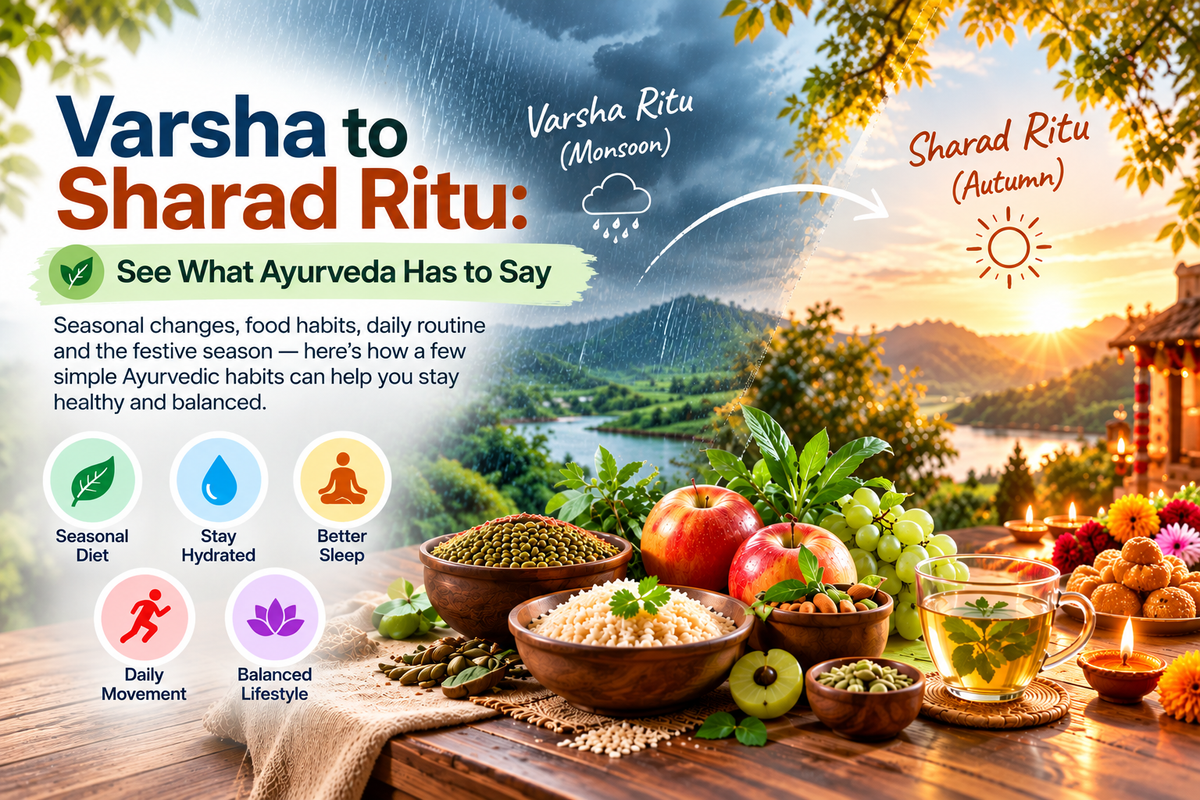
Varsha to Sharad Ritu: See What Ayurveda Has to Say
If the weather has been confusing you recently, you are certainly not alone.
It rains one day, so you feel almost cold the next morning, but hot again by afternoon. You leave home in preparation for a light jacket and wish you had brought more water when you return. The weather seems to be deciding every few hours.
Interestingly, this is also a time of seasonal change — from Varsha Ritu (monsoon season) to Sharad Ritu (the autumn season).
The change in weather, along with shifts in food habits, daily routine and even our surroundings need extra attention.
Your appetite may seem to be changing, your sleep could be irregular and on some days you may be full of energy while on others you feel like slowing down. Seasonal coughs, colds, and other common health problems may seem to be making their rounds.
And then, just when you are settling down, the festive season arrives.
Navratri, Dussehra, Diwali and all the celebrations that accompany these days bring in family, sweets, festive meals, travel, late nights, and an altogether different pace to life.
Perhaps this is the right time to understand what the transition from Varsha to Sharad Ritu entails and how a few simple Ayurvedic seasonal habits might help you get ready to face the months ahead.
Just a few small adjustments.
What Is the Transition from Varsha to Sharad Ritu?
As Ayurveda traditionally divides the year into six seasons, the Varsha Ritu (the rainy season) is followed by Sharad Ritu (the autumn season). This transition between one season and another is referred to as Ritusandhi, and this idea is very simple, really.
It is not necessary to keep our routine exactly the same throughout the year, especially when the weather is changing. A few small changes to the way we eat, sleep, exercise and move through our days.
This is essentially what Ritucharya is, the Ayurvedic concept of seasonal routine.
And it makes perfect sense if you think about how we move through our daily lives.
What you want to eat on a rainy, humid day may not be the same as what you desire when the sky clears and the sun gets stronger, in addition to your appetite and outdoor activity changing.
So instead of fighting the change, Ayurveda encourages us to adapt to it.
What Does Ayurveda Say About Sharad Ritu?
Sharad Ritu follows the rainy season, and the skies gradually clear.
There is more sunlight and the weather begins to seem different, depending on the region one is in.
Ayurvedic texts traditionally attribute an increase in Pitta to this season, which is why Sharad Ritu has its own food and lifestyle recommendations.
The advice may not seem as complicated as it does.
Traditional Ayurvedic guidance recommends lighter and balanced foods and includes foods such as rice, wheat, green gram, amla and grapes. Heavy, oily and very spicy foods are generally recommended in moderation.
There is also an emphasis on not exposing oneself to excess sunlight and following a steady daily routine.
You don't need to turn this into a long list of rules.
The more useful thing to look at is this:
Start With Your Food
Food is probably the easiest place to start when the season changes.
After months of monsoon weather, it is a good time to bring some variety to your everyday meals.
Think seasonal fruits and vegetables, dals and pulses, whole grains, nuts and seeds and freshly prepared meals. Enough water through the day.
You don't need to follow a complicated Sharad Ritu diet.
You also don't need to stop yourself from enjoying everything you enjoy.
Just take a look at your overall eating pattern.
If most of your meals are well balanced and you occasionally enjoy something fried, it is very different to making rich, heavy food the standard of your everyday diet.
Ayurveda's seasonal approach is less about restriction and more about balance.
And This Is a Good Time to Prepare for the Festive Season
There is another reason this seasonal transition is important.
It comes just before one of the busiest food and social seasons of the year.
The festive season has a way of changing everything.
There are sweets at home, snacks at the office, family dinners, shopping trips, guests, travel, long evenings and suddenly your normal meal and sleep timings are nowhere to be seen.
You don't need to avoid all of this.
In fact, you shouldn't have to.
But it helps to get your everyday routine in a reasonably good place before the festivities arrive.
- Eat regular meals.
- Drink enough water.
- Get back to some daily movement.
- Sleep properly.
- Keep your everyday meals simple and balanced.
That way, when the festive season arrives, you are not repairing a routine that has already completely strayed.
You Don't Have to Say No to Festive Food
This is the most important part.
Healthy festive eating does not mean saying no to every sweet, refusing every family dinner or worrying about each festive meal.
Food is part of our festivals.
It is part of meeting people, celebrating with family and enjoying traditions that come around only once a year.
So enjoy it.
If there are sweets, have some. If there is a family dinner, eat and enjoy it. If someone makes your favourite festive dish, don't sit there counting every bite. The trick is to adjust rather than restrict.
If you had a heavy dinner last night, have a simpler breakfast the next morning. If you know you have a celebration in the evening, eat normally during the day rather than skipping meals and arriving at dinner extremely hungry. If you have several celebrations in one week, keep the meals in between them simple. You don't have to compensate for festive food. You just have to balance it.
Keep Moving, Even When Life Gets Busy
The festive season can make even the simplest routine difficult to maintain. There will be days when your usual workout doesn't happen. That's okay. Movement does not always have to mean a gym session or a one-hour workout. Go for a walk, or take the stairs. Walk after dinner. Get a little movement in before your day gets busy. Even 20 or 30 minutes can be useful. The idea is not to turn the festive season into a fitness challenge. It is simply to avoid becoming completely inactive for weeks.
And Don't Forget Sleep
Sleep is another thing that quietly gets pushed aside during festivals. One late night is hardly a problem. But one celebration becomes another, then guests stay late, then there is shopping, travel or another family function. Before you know it, your sleep schedule has completely changed. Try to keep some normality on the days when you don't have plans. If you sleep late one night, get back to your usual schedule the next night. It sounds very basic, but these things matter. Especially when the weather itself is already putting your routine through enough changes.
Give Your Body Some Time to Adjust
One thing to remember about a seasonal transition is that it does not happen overnight. The weather changes in a gradual way, and so does our routine. That is also why the Ayurvedic idea of Ritusandhi is interesting, it is not about waking up on the first day of Sharad Ritu and suddenly changing everything. It is about the transition being slow. Maybe start eating a little lighter, bring back your morning walk, get your sleep timings under control, drink enough water and spend some time outdoors when the weather is comfortable. These are small things, but they can make the change in season much easier.
You Don't Need a Pre-Festive Detox
There is always some new health trendy thing that appears before the festive season. A detox, a juice cleanse, a very restrictive diet. A promise to lose weight before Diwali so you can "eat freely" later. You don't really need any of that. If you want to prepare for the festive season, prepare by taking care of the basics. Eat well most days, stay active, sleep enough, drink water, and keep your meals balanced. Then enjoy the celebrations when they come. A healthy routine should be flexible enough to accommodate a few festive meals.
Why This Seasonal Approach Still Feels Relevant
This is probably what makes the Ayurvedic idea of Ritucharya so interesting even today. It starts with something very ordinary. The weather changes, and when the weather changes, our lives change with it. We eat differently. We spend our time differently. We sleep differently. We become more or less active. Our social calendars change too. So why should our routine remain exactly the same? The transition from Varsha Ritu to Sharad Ritu gives us a natural opportunity to pause and make a few adjustments. Not dramatic ones, just enough to get back into a comfortable rhythm before the festive season begins.
The Takeaway
You don't have to give up sweets. You don't have to avoid festive meals. You don't need a strict diet. Start with a balanced everyday routine. Then make room for celebration. Because healthy festive living isn't about saying no to everything. It is about knowing when to enjoy, when to adjust and when to simply return to your normal routine.
Frequently Asked Questions
What is Sharad Ritu?
Sharad Ritu is the autumn season in the traditional Ayurvedic seasonal calendar. It follows Varsha Ritu, the monsoon season, and brings a gradual change in weather and daily routines.
What is the transition from Varsha to Sharad Ritu?
It is the seasonal change from the rainy season to autumn. Ayurveda refers to the transition between seasons as Ritusandhi and recommends gradually adapting food and lifestyle during this period.
What should we eat during Sharad Ritu?
Traditional Ayurvedic guidance recommends lighter and balanced foods during Sharad Ritu and includes foods such as rice, wheat, green gram, amla and grapes. Heavy, oily and very spicy foods are generally best enjoyed in moderation.
How can I prepare my body for the festive season?
Start with simple habits before the celebrations begin. Eat regular balanced meals, stay hydrated, get enough sleep and keep some movement in your daily routine.
Can I eat sweets during the festive season?
Yes. Festive foods can be enjoyed as part of a balanced routine. The idea is to enjoy them in moderation rather than making sweets and rich foods an everyday habit.
What is Ritucharya in Ayurveda?
Ritucharya is the Ayurvedic concept of adjusting food and lifestyle according to the seasons. It encourages gradual changes as the weather and environment change.
Do I need to follow a strict Ayurvedic routine during Sharad Ritu?
No. Traditional seasonal guidance can offer useful principles, but your routine does not need to become complicated. Simple changes in food, sleep, movement and everyday habits can help you adjust to the seasonal transition.


