

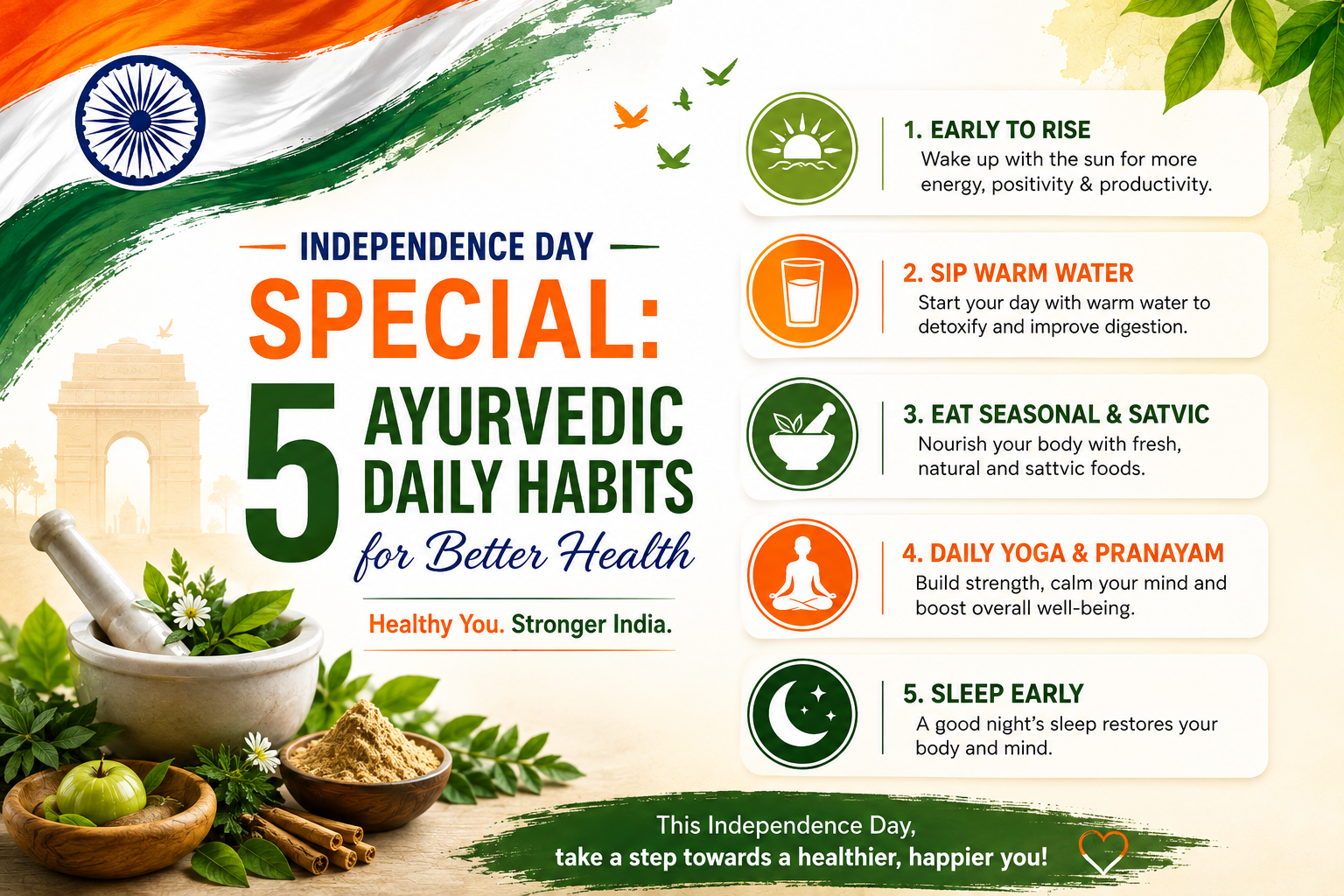
Every year on Independence Day, we celebrate the freedom that our country achieved. But freedom can also make us think about the choices we make in our own lives.
Are we truly free from the habits that quietly affect our health?
Modern life has made many things easier. Food is available at the click of a button, work can continue from almost anywhere, and entertainment is always within reach. But convenience can also bring habits that may not always support our wellbeing - irregular meals, long hours of sitting, excessive screen time, processed foods, excess sugar and inadequate sleep.
This doesn't mean we need to completely change our lifestyle or give up everything we enjoy.
Sometimes, better health begins with something much simpler:
Making better choices, consistently.
This Independence Day, let's think beyond freedom as something we celebrate once a year. Let's also think about becoming more independent in the way we understand, manage and care for our health.
What Does "Health Independence" Really Mean?
Health independence doesn't mean managing every health concern on your own or avoiding doctors and medicines.
It means becoming more aware of your body, understanding your health needs, asking better questions and taking responsibility for the everyday choices that influence your wellbeing.
It can be as simple as:
-
Choosing a balanced meal instead of relying on processed food every day
-
Moving your body instead of sitting continuously for hours
-
Paying attention to recurring symptoms instead of ignoring them
-
Understanding what goes into the products and foods you consume
-
Seeking professional guidance when something doesn't feel right
In other words, health independence is about informed choices-not isolation from healthcare.
What Does Ayurveda Say About a Healthy Daily Routine?
One of the important concepts in Ayurveda is Dinacharya, or a daily routine.
Ayurveda places considerable importance on regularity in everyday activities such as eating, sleeping, personal care and movement. The underlying idea is simple: our bodies benefit from rhythm and consistency.
Regular meals, adequate sleep, appropriate physical activity, mindful eating and good digestion can form the foundation of a sustainable routine.
Ayurveda also recognises that lifestyle shouldn't be identical for everyone. Factors such as the season, environment, age, individual constitution and personal needs can influence what works best for a person.
That is why a sustainable health routine should be personal, practical and consistent.
5 Simple Ayurvedic-Inspired Habits for Better Health
You don't need to transform your entire lifestyle overnight. Start with a few habits that you can realistically follow.
1. Start Your Morning Mindfully
Your morning routine can influence how you approach the rest of the day.
Instead of immediately reaching for sugary drinks or spending the first few minutes scrolling through your phone, start your day calmly.
A simple glass of water can be a good beginning. If tea or coffee is part of your routine, consider pairing it with a nutritious breakfast rather than making it the only thing you consume in the morning.
The goal isn't to create a complicated morning ritual.
It's simply to start the day with intention.
2. Make Movement Part of Your Day
You don't necessarily need an intense workout to become more active.
Small amounts of movement throughout the day can make a difference to an otherwise sedentary lifestyle.
A gentle walk after a meal, taking the stairs when appropriate, stretching between long periods of sitting or simply walking around during work breaks can help make movement a natural part of your routine.
If you spend several hours at a desk, try not to remain seated continuously for long periods.
Movement doesn't have to be complicated to become a habit.
3. Build a More Balanced Plate
Healthy eating isn't about eliminating one particular food group or following every diet trend you see online.
Instead, focus on creating balanced meals that provide a variety of nutrients.
Depending on your individual dietary needs, a meal can include appropriate portions of:
-
Protein-rich foods
-
Fibre-rich carbohydrates and whole grains
-
Vegetables
-
Seasonal fruits
-
Healthy sources of fats
Pay attention to portions and try to eat mindfully rather than eating in front of a screen whenever possible.
Ayurveda also places importance on Aahar, or food, and encourages attention to what we eat, how we eat and how food fits our individual needs.
The objective isn't perfection.
It’s staying consistent.
4. Give Your Sleep a Regular Rhythm
Sleep is often one of the first things we sacrifice when life gets busy.
Late-night work, endless scrolling and irregular schedules can gradually become normal.
Instead of trying to suddenly change everything, start by creating a sleep routine that you can realistically maintain.
Try to keep your sleeping and waking times reasonably consistent. Reduce unnecessary screen time before bed and create an environment that helps you wind down.
Good sleep is not a luxury.
It is an important part of taking care of your body and mind.
5. Eat With the Season and Your Individual Needs in Mind
Our food choices don't always have to be complicated.
Traditional Indian diets have long included seasonal foods and a wide variety of ingredients.
Depending on your individual needs and dietary tolerance, traditional foods such as vegetables, fruits, whole grains, fermented foods and commonly used spices can be part of a balanced diet.
Ayurveda also considers Ritu, or seasonal changes, when discussing diet and lifestyle.
However, there is no single traditional food or drink that is right for everyone.
Instead of blindly following health trends, understand your own needs and choose foods that work well for you.
Traditional wisdom works best when combined with awareness and individualisation.
You Don't Need to Change Your Life Overnight
One of the biggest mistakes we make when trying to improve our health is trying to change everything at once.
A new diet.
A new workout.
A new sleep schedule.
Multiple supplements.
And a long list of rules.
After a few weeks, the routine becomes difficult to maintain.
Instead, start small.
Maybe begin with a better breakfast.
Then add a short daily walk.
Then work on your sleep schedule.
Then become more mindful about what you eat.
Healthy living is not about doing everything perfectly. It's about making better choices more often.
Health Independence Is About Asking Better Questions
We live in an age where health information is everywhere.
One person says carbohydrates are bad.
Another says you should eliminate sugar completely.
Someone recommends fasting.
Someone else recommends a particular supplement.
Social media can make it difficult to separate useful information from misinformation.
This is why health independence also means learning to ask questions:
What is the evidence behind this claim?
Is this appropriate for me?
Does this fit my lifestyle?
Do I actually need this?
Should I speak to a qualified healthcare professional?
Being health-conscious doesn't mean believing every health trend.
It means becoming a more informed consumer of health information.
This Independence Day, Choose Better Habits
Independence is often associated with freedom from external control.
But perhaps there is another kind of freedom worth thinking about.
The freedom to make informed choices.
The freedom to understand our bodies.
The freedom to question health misinformation.
The freedom to choose nourishing food more often.
You don't need to become a completely different person to become healthier.
You don't need to follow every wellness trend.
Sometimes, independence begins with one small choice-and the consistency to repeat it tomorrow.
This Independence Day, while we celebrate the freedom of our nation, let's also think about the freedom we owe ourselves:
the freedom to make better choices for our health, one day at a time.
Frequently Asked Questions
1. What is Dinacharya in Ayurveda?
Dinacharya refers to a daily routine described in Ayurveda, and everyday practices such as eating, sleeping, personal care and other lifestyle activities. The specific routine may vary depending on an individual's needs and circumstances.
2. What are some simple Ayurvedic habits for everyday health?
Simple habits inspired by Ayurvedic principles can include maintaining regular meal and sleep timings, eating mindfully, staying physically active, choosing appropriate seasonal foods and paying attention to digestion and overall wellbeing.
3. Does following an Ayurvedic lifestyle mean completely changing your modern lifestyle?
No. Ayurvedic lifestyle principles can be adapted to modern life. The goal is not necessarily to abandon your existing routine, but to make sustainable changes that support your health and wellbeing.
4. Why is consistency important for healthy habits?
A healthy habit is more likely to become sustainable when it fits naturally into your everyday routine. Making small changes that you can maintain over time is generally more practical than making extreme changes that are difficult to continue.
5. Is there one Ayurvedic diet that is suitable for everyone?
No. Dietary needs can vary depending on factors such as age, health status, lifestyle, food preferences, individual tolerance, environment, and other personal circumstances. If you have a health condition, seek advice from a qualified healthcare professional.
6. Is a short walk after meals beneficial?
A gentle walk after a meal can be an easy way to incorporate movement into your daily routine. The appropriate duration and intensity depend on your fitness level and health status. People with specific medical conditions should follow their healthcare professional's advice.
7. Can Ayurvedic practices replace medical treatment?
Ayurvedic lifestyle practices should not be used as a replacement for necessary medical diagnosis or treatment. If you have a health condition, take prescribed medication or consult a healthcare professional.
8. How can I start a healthier daily routine?
Start with one or two realistic changes rather than trying to change everything at once. Once these habits become comfortable, gradually build on them.
Final Thought
Health independence doesn't mean doing everything yourself.
It means understanding your choices, taking care of your everyday habits, knowing when to ask for help and making decisions that support your long-term wellbeing.
This Independence Day, perhaps the most meaningful change, isn't a dramatic one.
It is one small, healthier decision today-and another one tomorrow.
Happy Independence Day from NatAyush.


