

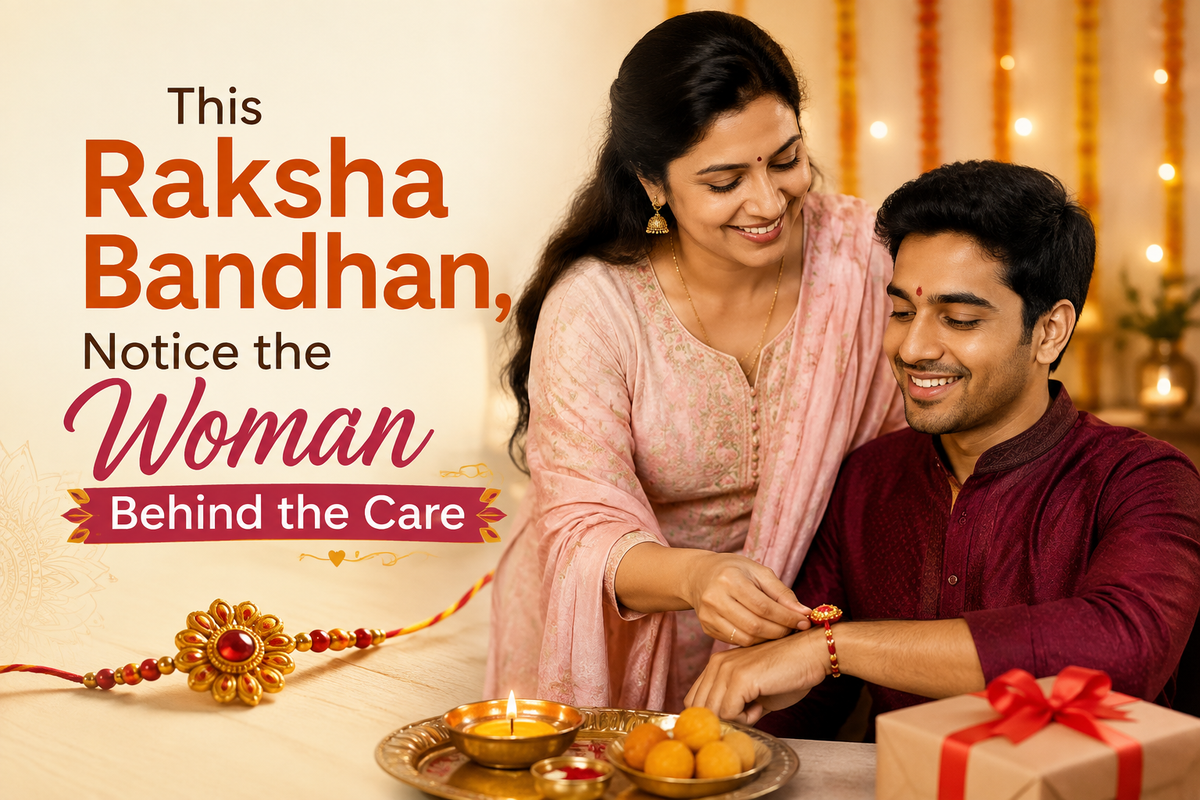
There is something special about growing up with a sister. She may begin as the little girl you played with, fought with and grew up alongside. Then she becomes a teenager discovering her own identity, followed by a young woman building a life, a career, relationships and dreams of her own. And as she grows, the relationship between a brother and sister changes too.
As children, protection may mean walking her home, standing up for her or simply being there when she needs you. But as we grow older, we begin to understand that protection can mean something much more meaningful: understanding, awareness and being present.
Because her needs change with every stage of life.
And one of the most important things we can become more aware of is her health.
Protection Through Understanding, Not Judgement
Women experience many physical, emotional and hormonal changes throughout their lives. Yet, many of these changes are still misunderstood, casually dismissed or simply accepted as something women have to "deal with."
A teenage girl may be trying to understand the changes happening in her body.
A young woman may be balancing work, relationships, family responsibilities and her own ambitions.
Later, changes in hormones, sleep, energy, mood and metabolism can become part of another phase of life, including perimenopause and menopause.
Every stage comes with its own needs.
As a brother, you may not always know exactly what she is experiencing—and you don't have to.
What matters is being aware enough to understand that what she is feeling is real and deserves attention.
Sometimes, support simply means listening instead of dismissing.
It means saying, "I understand. Take care of yourself."
Her Health Should Not Always Come Last

Women often become caregivers long before they realise it.
They take care of parents, partners, children, homes, careers and countless everyday responsibilities. Somewhere in between all of this, their own health can quietly move to the bottom of the list.
- Meals get skipped.
- Sleep gets compromised.
- Movement gets postponed.
- Health concerns get ignored because there is always something else that seems more urgent.
- But taking care of yourself is not selfish.
- It is essential to living well.
- A woman deserves to make time for her health—not only when something goes wrong, but as part of her everyday life.
- And this is where a brother's role can evolve too.
- Not by telling her what to do.
- Not by making decisions for her.
- But by encouraging her to take her own health seriously.
Understanding Her Through Every Stage of Life

Women's health needs can change significantly throughout life.
During adolescence, education and awareness can help a young girl understand and feel comfortable with the changes happening in her body.
During adulthood, balanced nutrition, regular movement, adequate sleep and managing everyday stress become increasingly important.
And as she approaches perimenopause and menopause, hormonal changes may bring experiences such as changes in sleep, mood, energy levels and overall wellbeing.
Menopause is a natural stage of life. But natural does not mean that every symptom should simply be ignored or tolerated.
Awareness can help women understand what is happening in their bodies and recognise when it may be appropriate to seek professional guidance.
For a brother, even this basic awareness can become a meaningful form of support.
You don't need to have all the answers.
Sometimes, you simply need to know that there are questions worth asking.
What Does Ayurveda Say About Women's Wellness?

The Ayurvedic approach to health is not limited to what we do after a problem appears.
It places importance on everyday habits—food, sleep, movement, digestion, rest and daily routine—and on adapting our lifestyle according to individual needs and changing seasons.
One important Ayurvedic concept is Dinacharya, or a daily routine.
The idea is not to create a complicated schedule or follow countless rules.
Instead, it is about building simple habits that can be followed consistently.
This can include:
-
Eating nourishing and balanced meals
-
Getting adequate and regular sleep
-
Staying physically active
-
Paying attention to digestion
-
Making time for rest and recovery
-
Listening to the body's changing needs
-
The goal is not perfection.
- The goal is consistency.
What Can We Really Do for the Women We Care About?
Women's health is ultimately personal. But the people around us can make healthy choices easier and emotional support stronger.
As a brother, you can:
Encourage regular health check-ups
Don't wait for a health concern to become serious before encouraging her to pay attention to it.
Support her in staying active
A walk together, a workout or simply encouraging her to make time for movement can go a long way.
Make healthier choices together
Healthy habits become easier when they are shared rather than imposed.
Give her space to prioritise herself
If she takes time for exercise, rest, hobbies or simply doing nothing, don't make her feel guilty about it.
Listen without immediately giving advice
Sometimes, what she needs is not another solution. She may simply need someone who listens.
And most importantly:
Don't dismiss changes in her health just because they are common.
Protection in Today's World Looks Different
Raksha Bandhan has traditionally been associated with a promise of protection.
But perhaps, as we grow older, our understanding of that promise can grow too.
Protection today isn't only about keeping our sisters safe from the world outside.
It can also mean supporting their wellbeing in a world that constantly asks them to do more.
- Irregular routines.
- Processed foods.
- Constant stress.
- Lack of sleep.
- Long working hours.
- Family responsibilities.
- The pressure to take care of everyone else before taking care of themselves.
- These are all realities of modern life.
- And sometimes, the best support a brother can offer is simply to notice.
- Notice when she is constantly tired.
- Notice when she isn't sleeping well.
- Notice when she has stopped making time for herself.
- Notice when she is going through a new phase of life and may need more understanding than advice.
- Not to judge.
- Not to interfere.
-
Just to be there.
- This Raksha Bandhan, Think Beyond the Rakhi
- A rakhi is a beautiful symbol of the bond between a brother and sister.
- But perhaps the promise behind it can evolve with time.
- Because protecting someone is not always about doing something for them.
- Sometimes, it is about helping them remember to do something for themselves.
- This Raksha Bandhan, don't just celebrate the sister you grew up with.
- Notice the woman she has become.
- Notice her health.
- Understand her journey.
- Respect the different phases of her life.
- And be there—not just when she asks, but when she needs someone to understand.
- Because sometimes, the most meaningful form of protection is simply care.
Frequently Asked Questions
1. Why is women's health awareness important?
Women's health needs change throughout life, from adolescence and adulthood to pregnancy, perimenopause and menopause. Awareness helps women understand these changes, make informed lifestyle choices and seek professional guidance when needed.
2. How can a brother support his sister's health?
A brother can support his sister by listening without judgement, encouraging healthy habits, supporting regular health check-ups and respecting her need to prioritise her own wellbeing.
3. What are some simple habits that support women's wellness?
Balanced nutrition, regular physical activity, adequate sleep, good digestion, stress management and a consistent daily routine can all contribute to overall wellbeing.
4. What is Dinacharya in Ayurveda?
Dinacharya refers to the Ayurvedic concept of maintaining a healthy daily routine. It emphasises consistency in areas such as eating, sleeping, personal care, movement and other everyday habits.
5. What is perimenopause?
Perimenopause is the transitional stage before menopause when hormonal changes can begin to affect menstrual cycles and may be accompanied by changes in areas such as sleep, mood and overall wellbeing.
6. Is menopause a natural stage of life?
Yes. Menopause is a natural biological stage in a woman's life. However, significant or concerning symptoms should not simply be ignored, and women should seek appropriate medical advice when needed.
7. How can families create a healthier environment for women?
Families can help by sharing responsibilities, encouraging healthy routines, respecting personal time, supporting physical activity and creating an environment where women feel comfortable discussing their health without judgement.